Building: between land and materials
In collaboration with:

With the support of:





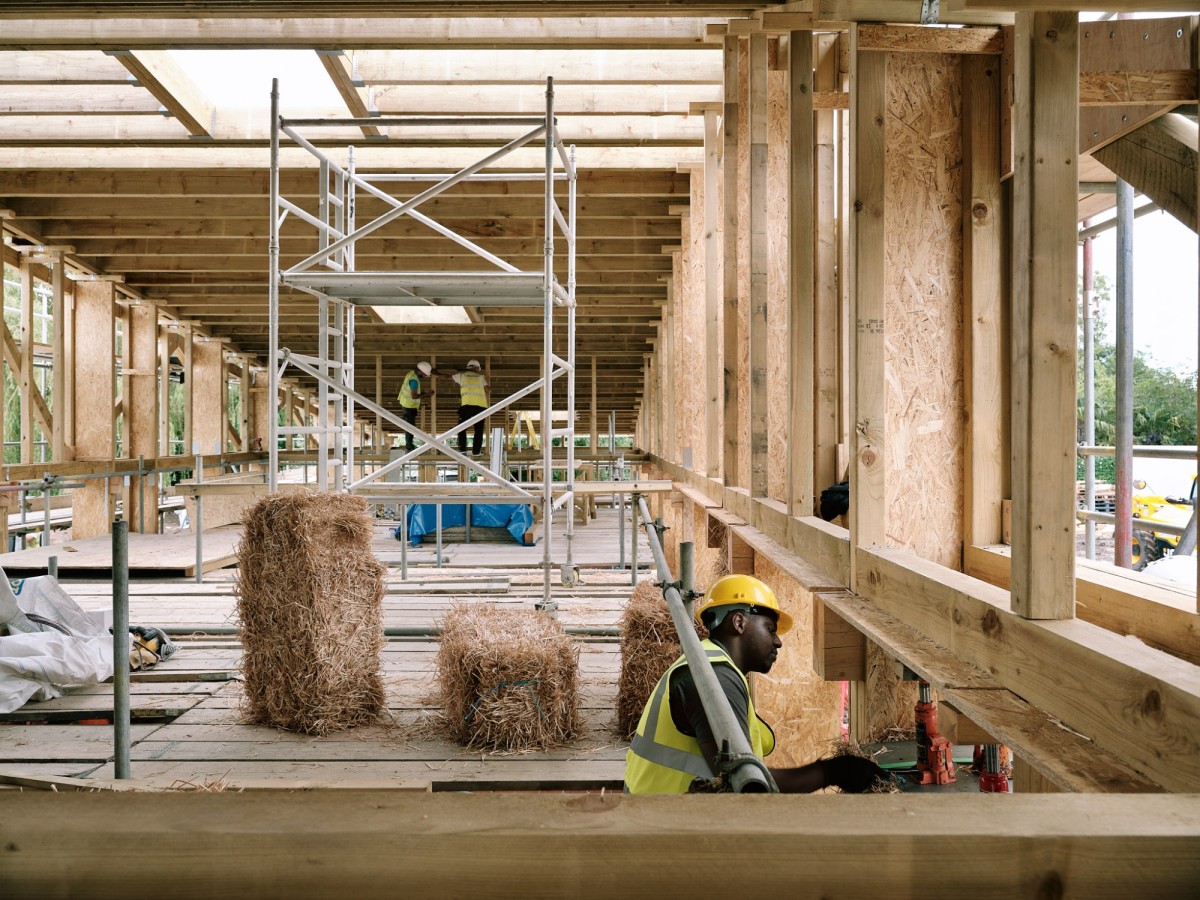
By reshaping the way building materials are made – but just as importantly grown, cultivated, in the agricultural sense – and incorporating this as an integral part of the design, they set a new standard for sustainable construction that goes far beyond existing labels. What place does construction occupy in the cycles of materials and use? How do maintenance and repair relate to new forms of use? Can we reintegrate architecture and agriculture?
Material Cultures is a design and research organisation led by Summer Islam, Paloma Gormley and George Massoud, with a focus on natural materials, low-carbon construction and building technology. They advocate the reintegration of architecture and agriculture, viewing buildings as inextricably linked to the landscapes where raw materials are extracted. Bio-based materials are low in carbon and offer an alternative to the globally produced, carbon-intensive and socially destructive materials widely used in the construction industry. They challenge the systems, technologies, processes, supply chains, regulations and materials that shape the construction industry, with the aim of transforming the way we build.
Their practice operates on various scales, from materials, interiors and buildings to the landscapes from which they originate. They design buildings that integrate biological materials and minimally processed minerals into efficient construction systems. In addition, they conduct strategic research into how these ideas can be applied on a large scale and how they relate to a broader movement towards regenerative land management practices. They teach at various institutions, including the Architectural Association and Central Saint Martins in London and the ETH in Zurich, and they run their own building skills programmes through a newly launched learning platform, MC Make. In 2023, they published a book entitled Material Reform, a collection of essays on the cultures, systems and infrastructures that shape the architecture sector and the destructive ecologies that it perpetuates.