A framework for bottom-up asylum centres in Brussels
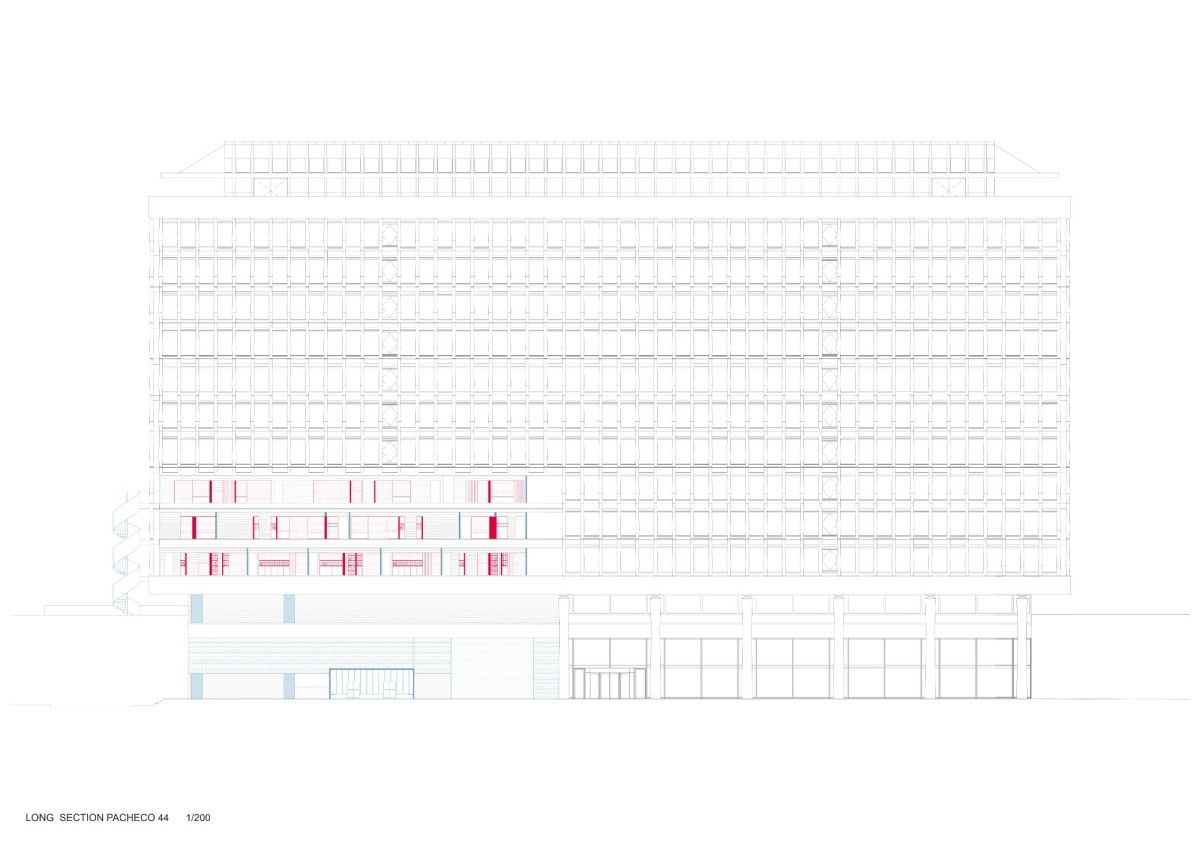
This project proposes a replicable design strategy to transform underused office buildings in Brussels into decentralised, bottom-up asylum centres. Faced with a dual crisis – an abundance of vacant buildings and an urgent need for housing – we see an opportunity to use existing buildings as the basis for inclusive and people-centred reception.
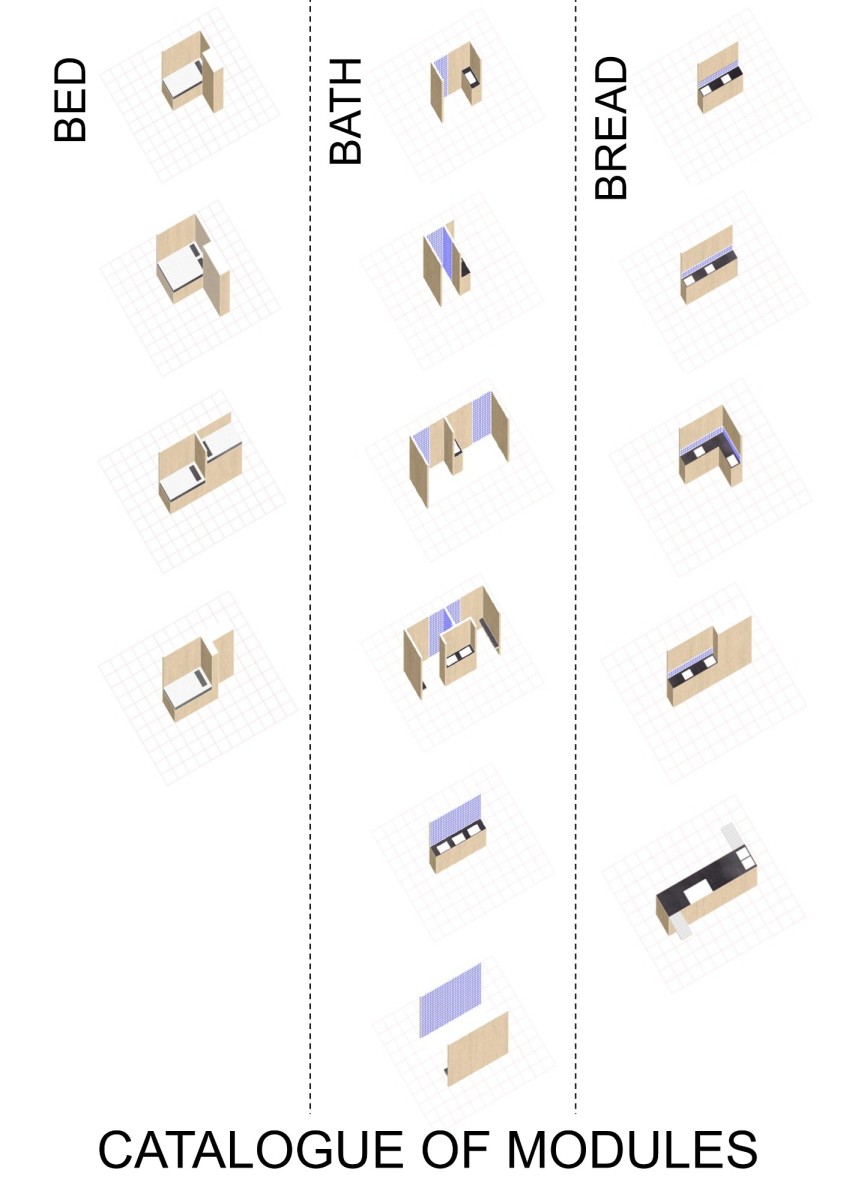
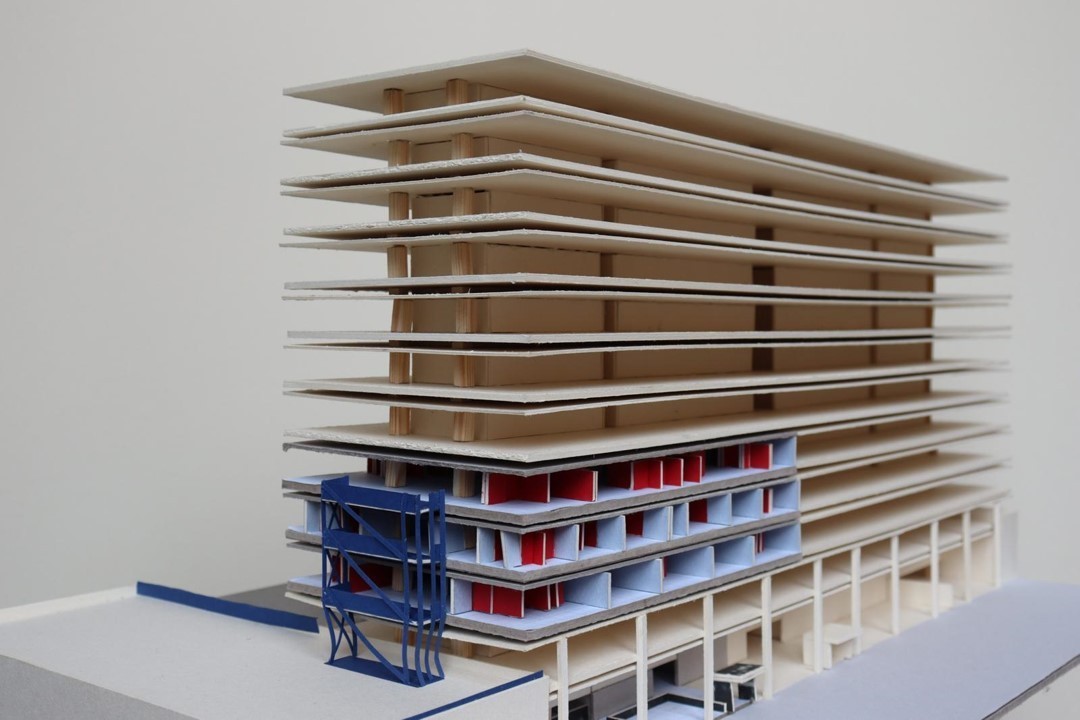
Today’s asylum centres, often housed in isolated state buildings such as former prisons or hospitals, provide only basic needs – bed, bath, bread – while reinforcing institutional control. In contrast, our framework prioritises autonomy, dignity and integration. We base our approach on squatting practices and co-living principles, with minimal impact on the host building: anything added can be removed or reused.
Embedding in the urban fabric
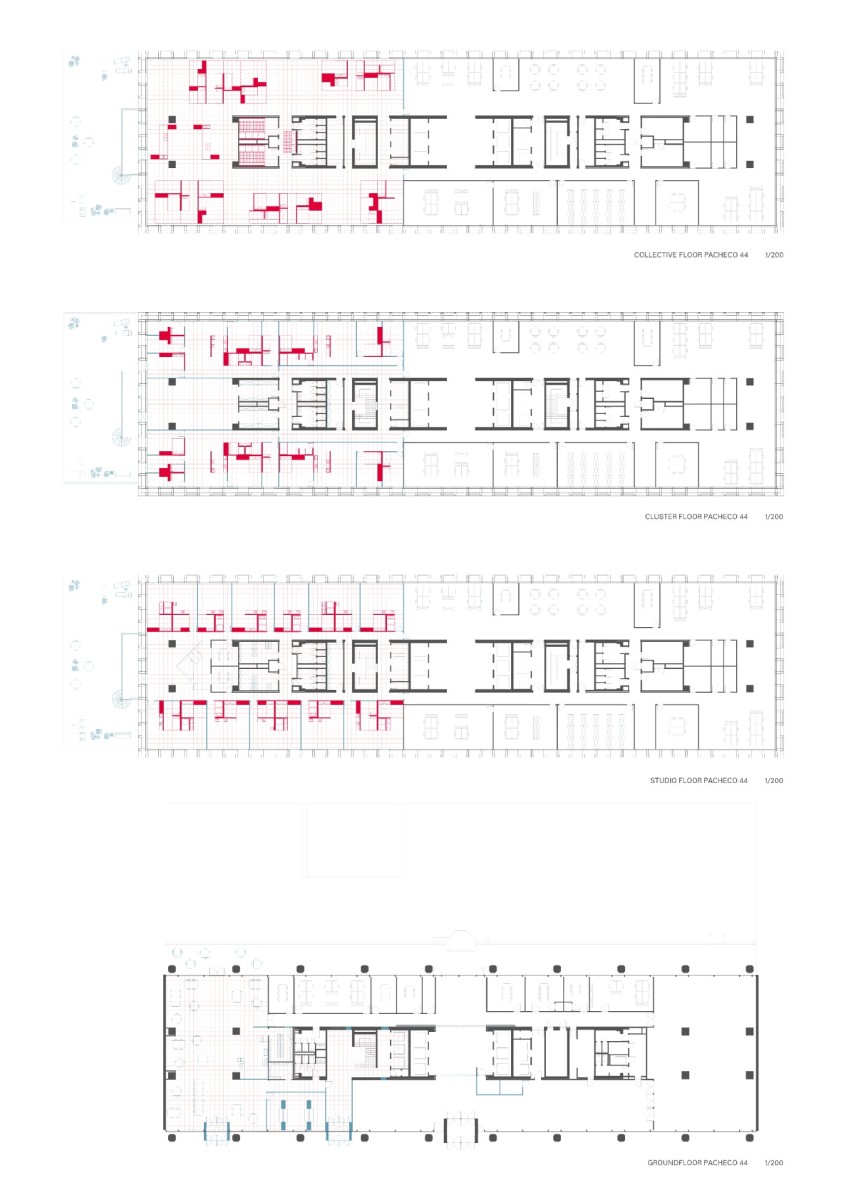
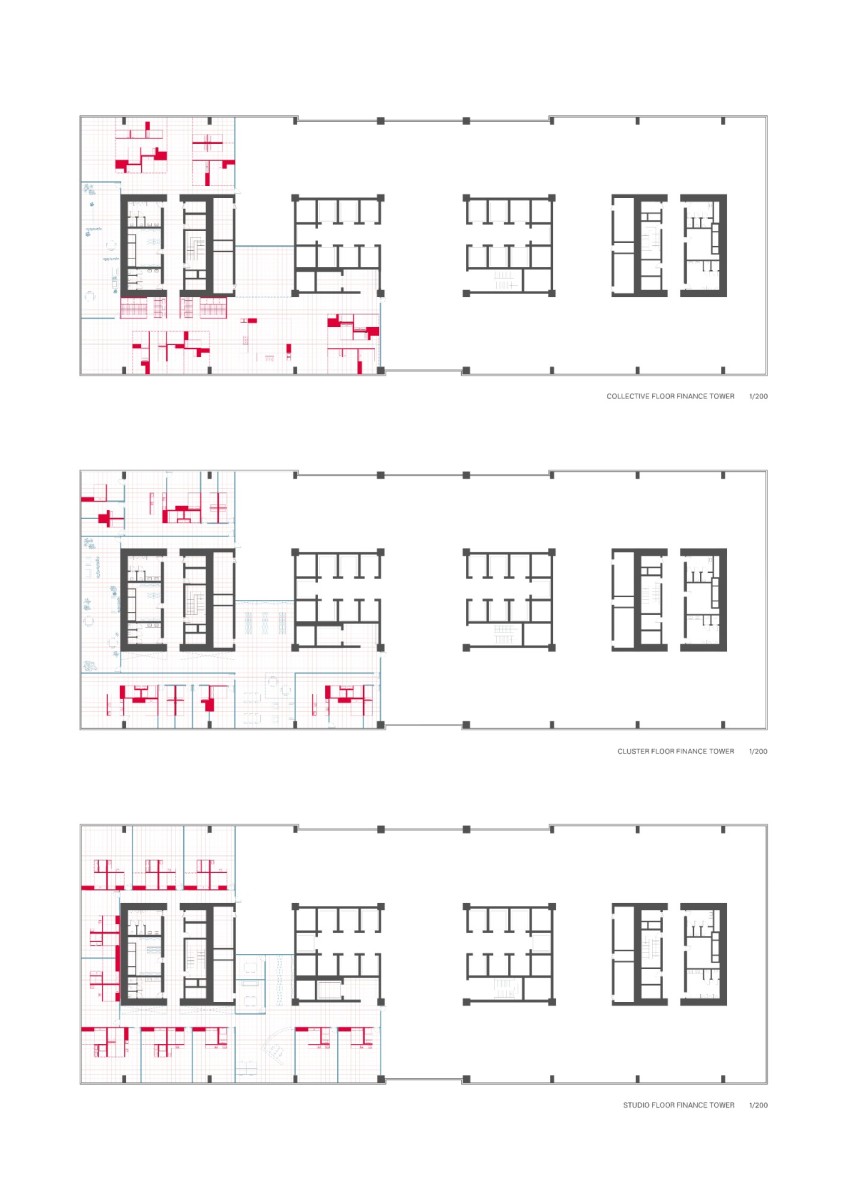
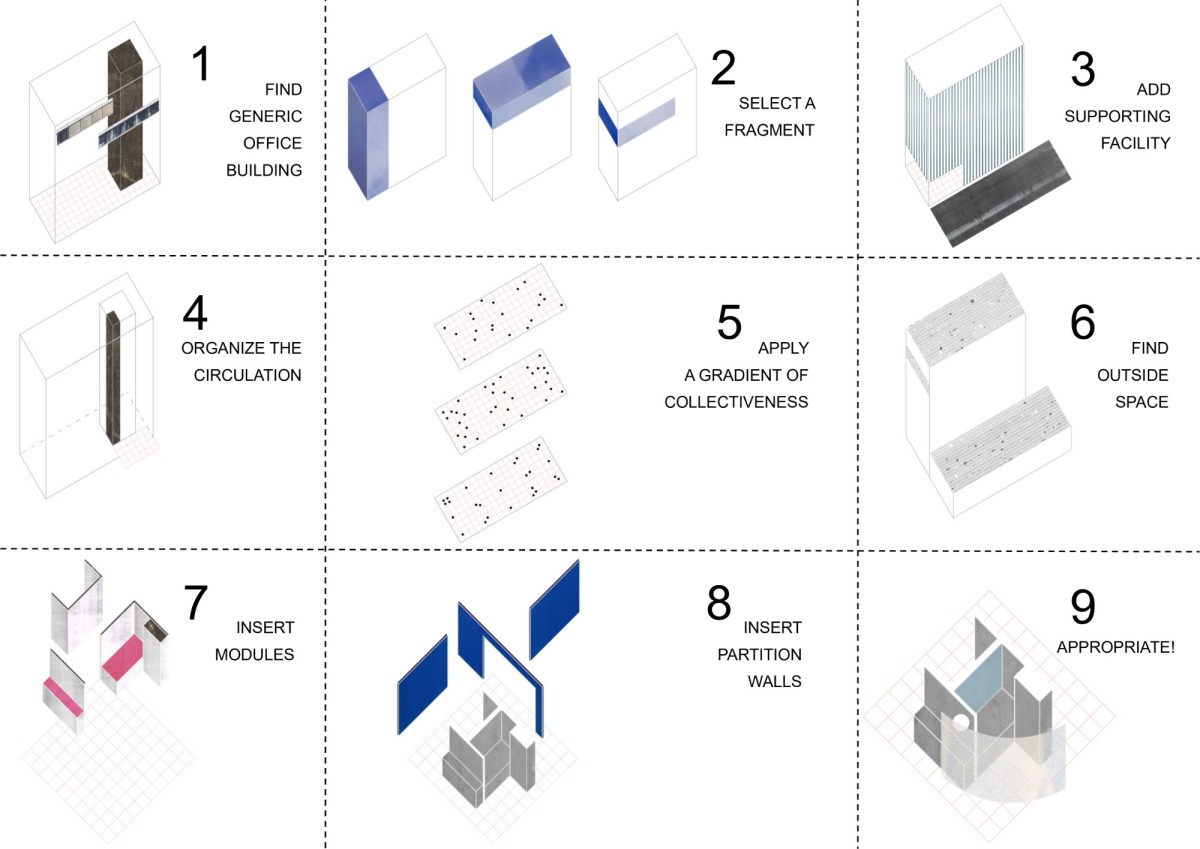
The framework follows nine steps. We start by identifying generic office buildings and selecting fragments within them so that asylum centres are embedded in the urban fabric rather than isolated. Each site includes public facilities on the ground floor – such as social restaurants or giveaway shops – to connect asylum seekers with the neighbourhood and create mutual benefit.
Lifestyles and flexibility
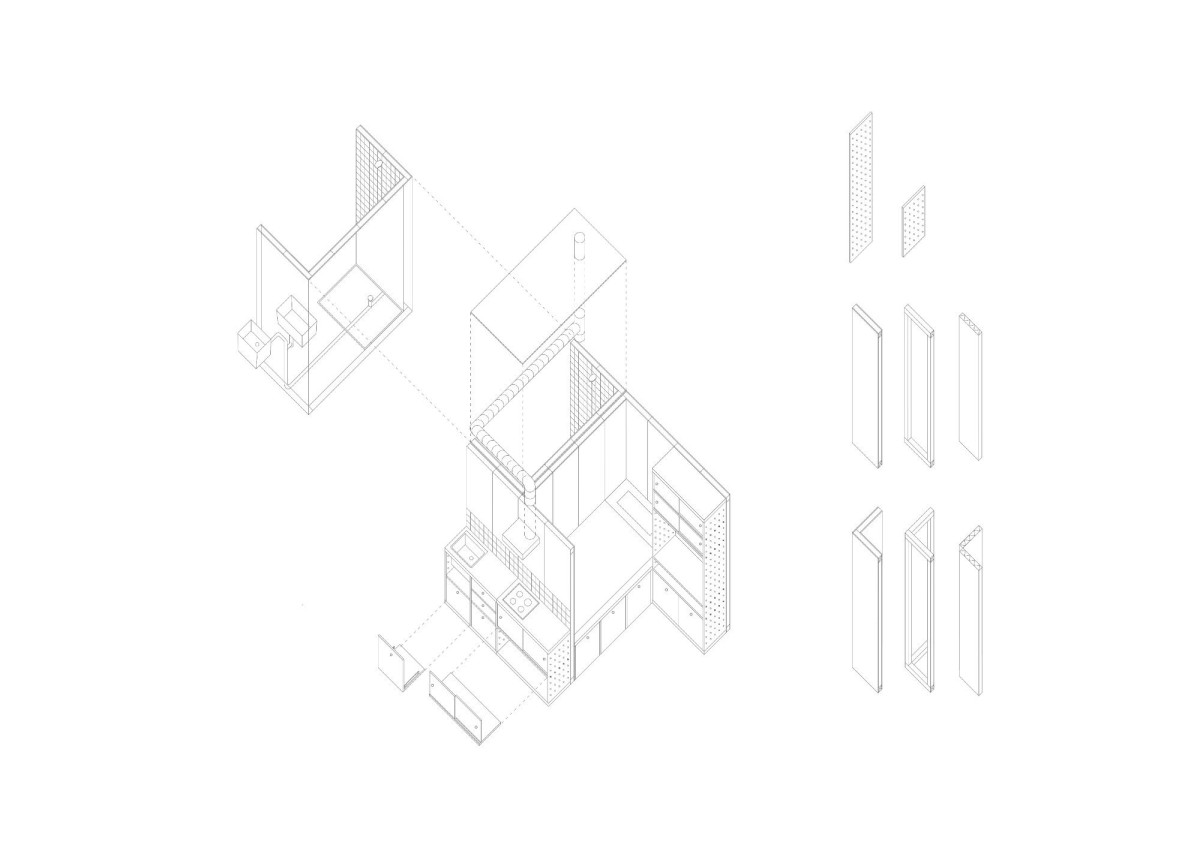
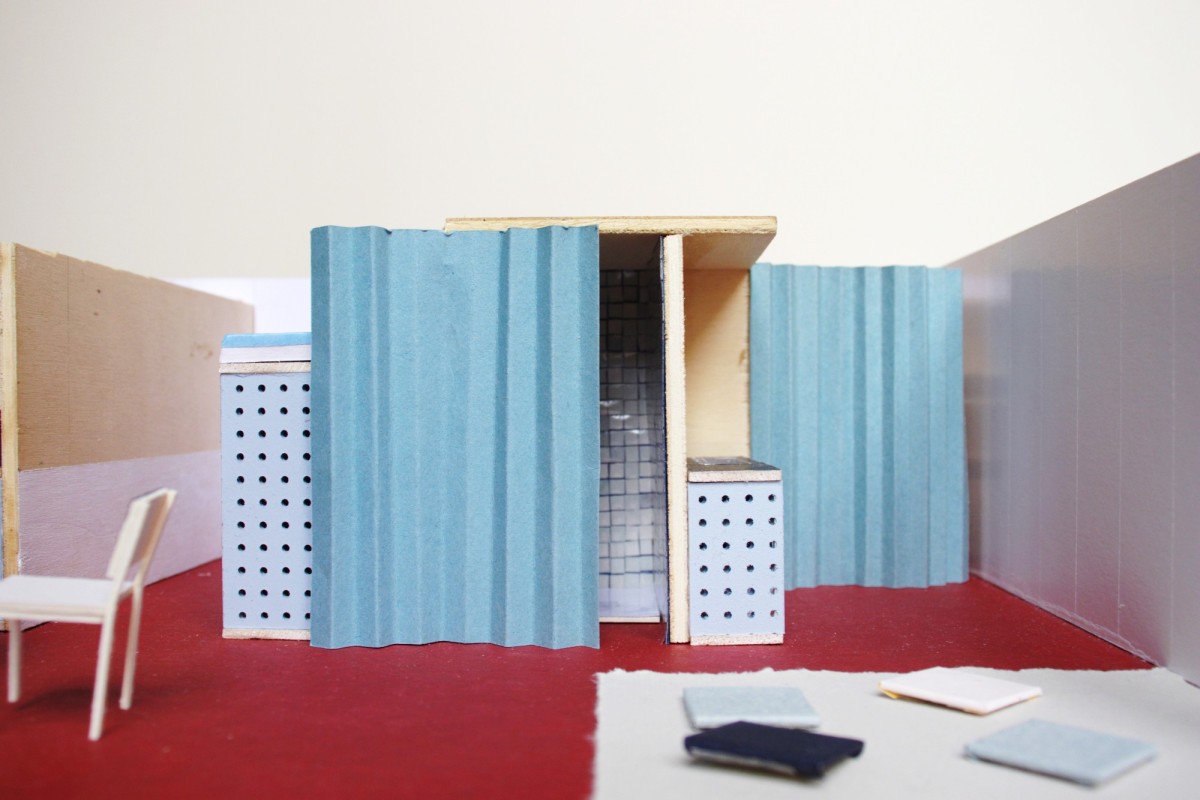
Living spaces are organised along a gradient of collectivity: from private studios, to co-living clusters, to highly communal housing. This spectrum allows people with different backgrounds and preferences to find a living form that suits their needs. Modular units, based on a 60×60 cm grid, are inserted without modifying the structure. These prefabricated modules define spatial configurations that can evolve with time. Existing partitions are reused or relocated; residual materials are collected and made available to residents to repurpose in on-site workshops. Each floor has access to daylight and outdoor space.
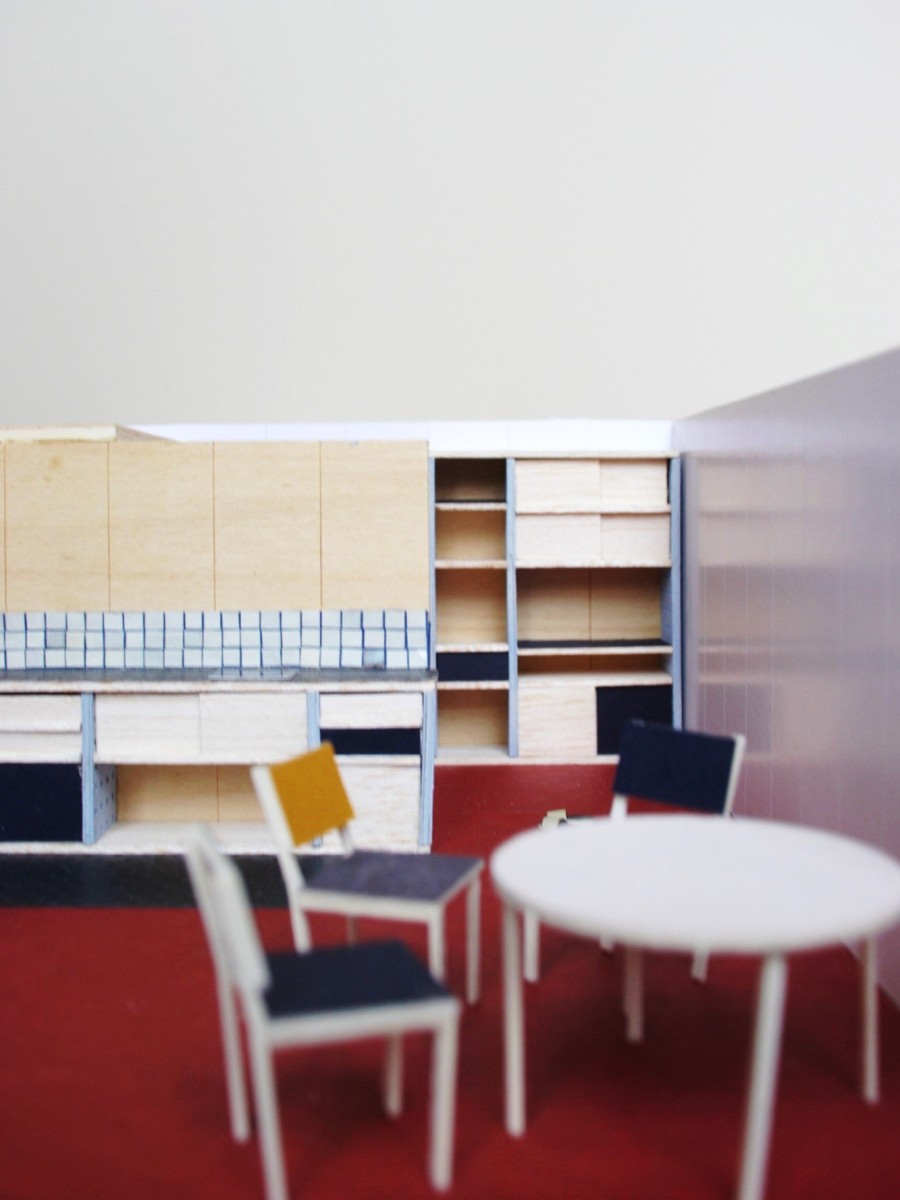
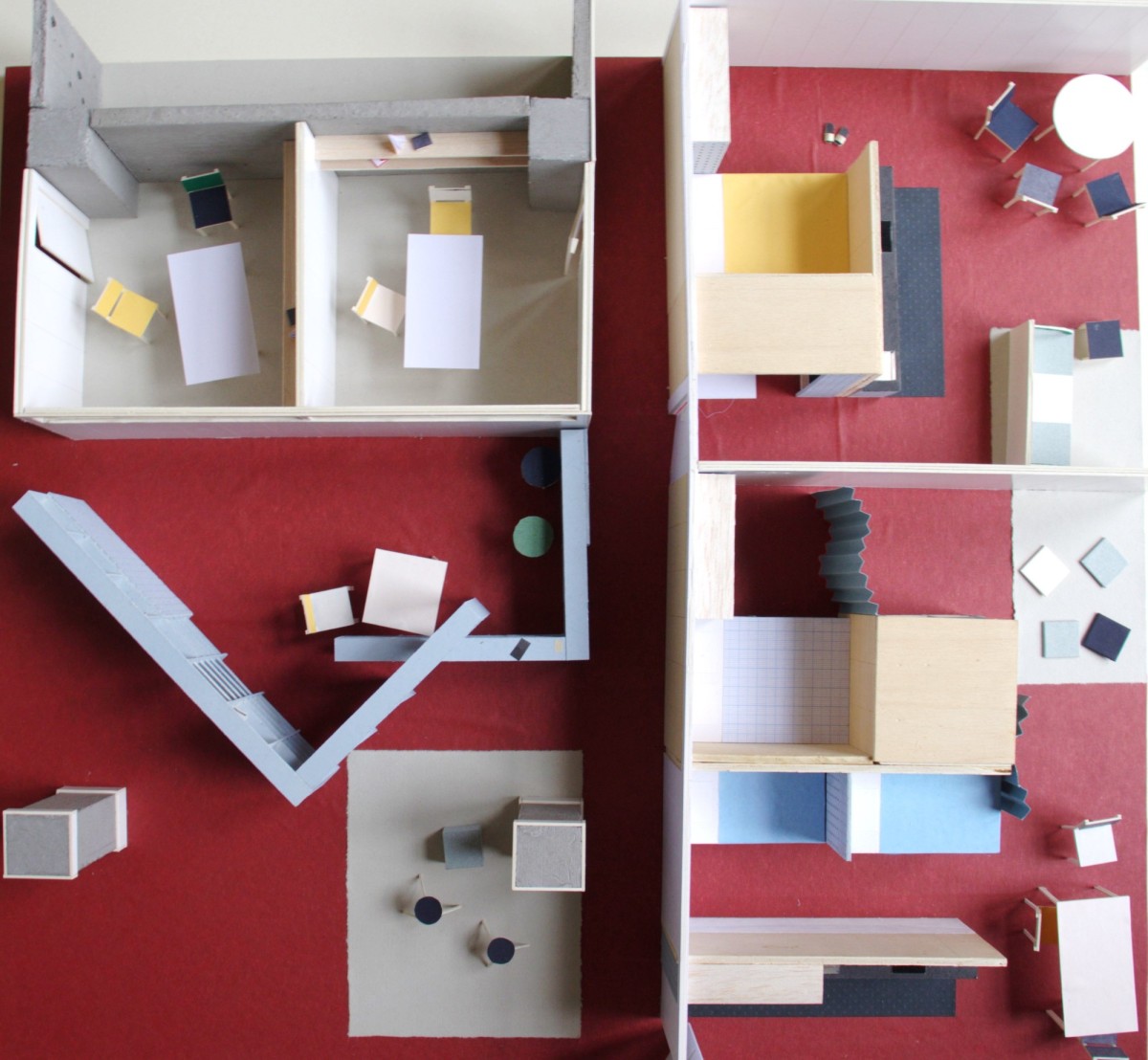
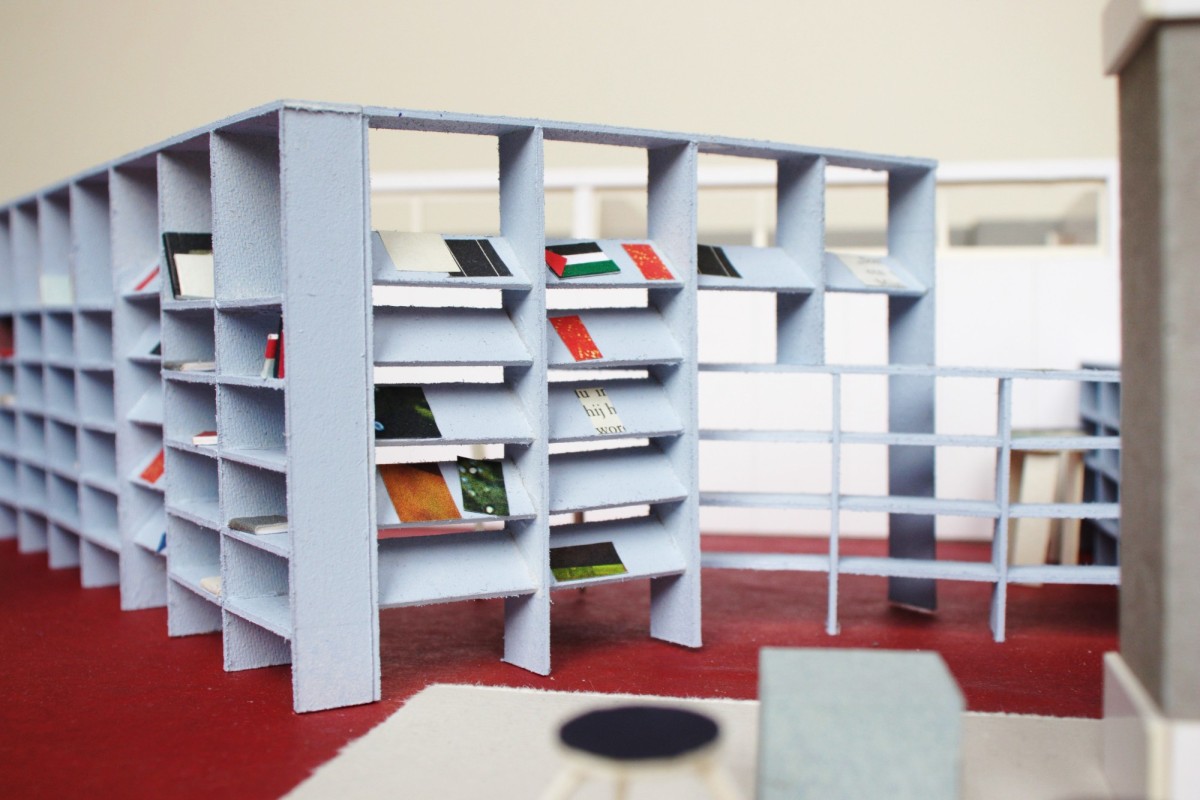
Towards self-determined integration
Over time, residents are encouraged to appropriate and adapt their environment, making temporary shelter a stepping stone to self-determined integration. This is not a fixed solution, but a replicable system – low-impact, adaptable, and embedded in the everyday urban fabric of Brussels – that paves the way for asylum centres that are more open, humane and inclusive. In this way, the strategy supports more than just housing: it promotes autonomy, integration and a sense of belonging.