Terra Vacua
The research examines the disappearing heathland landscape of the Opglabbekerzavel in Genk, where urbanisation, mining and infrastructure have fragmented the spatial fabric. The redevelopment of the former airfield serves as a case study for redefining transition zones as landscape links that facilitate interaction between people and nature. The graduation project develops a design strategy in which emptiness and rewilding are employed as spatial tools to reconnect identity, heritage and ecology.
 Thomas Cuyt
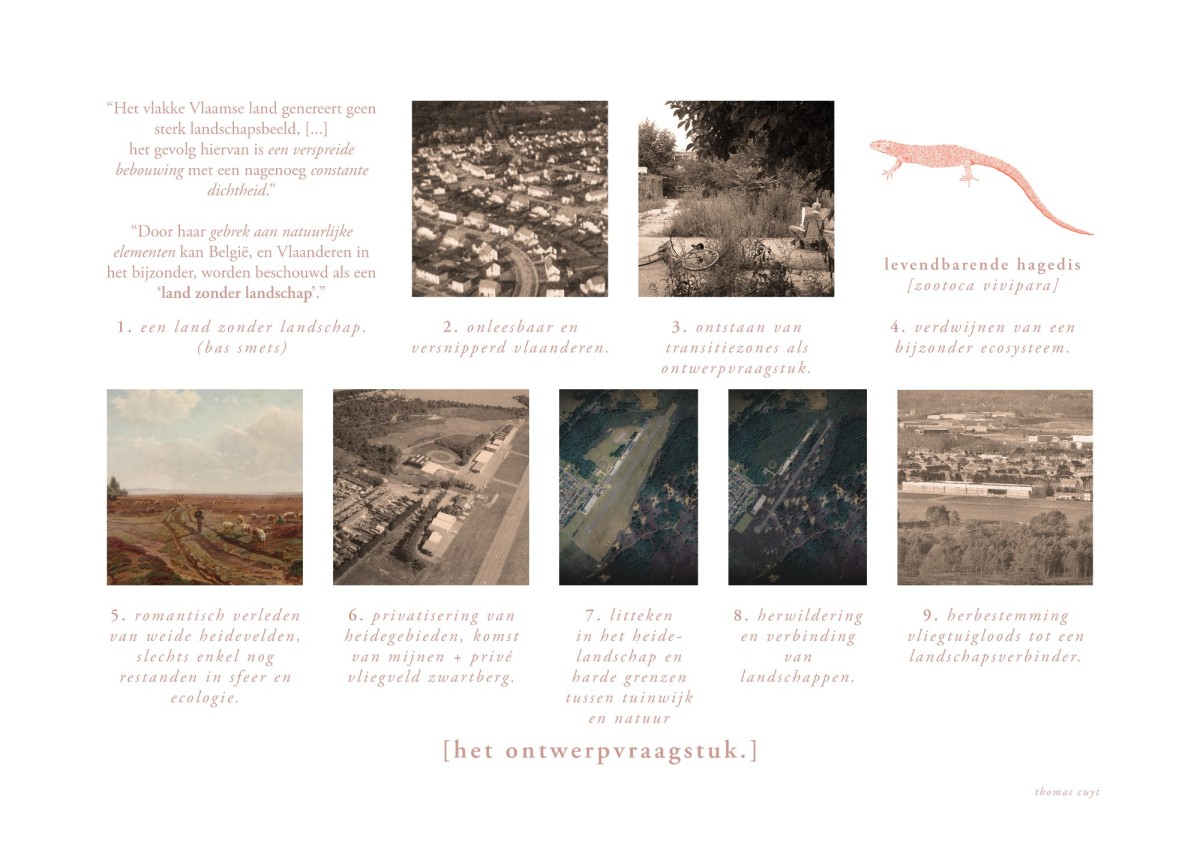
Since the introduction of the Flanders Spatial Structure Plan, towns have begun to sprawl and villages have been reduced to isolated islands, losing their authentic character. The boundaries between people and nature have become sharp and abrupt; we can now only speak of fragmented landscapes in Flanders. In Genk, the once-extensive heathland of Opglabbekerzavel is at risk of disappearing due to a lack of action. This landscape is one of the last recognisable natural identities of Flanders.
 Thomas Cuyt
 Thomas Cuyt
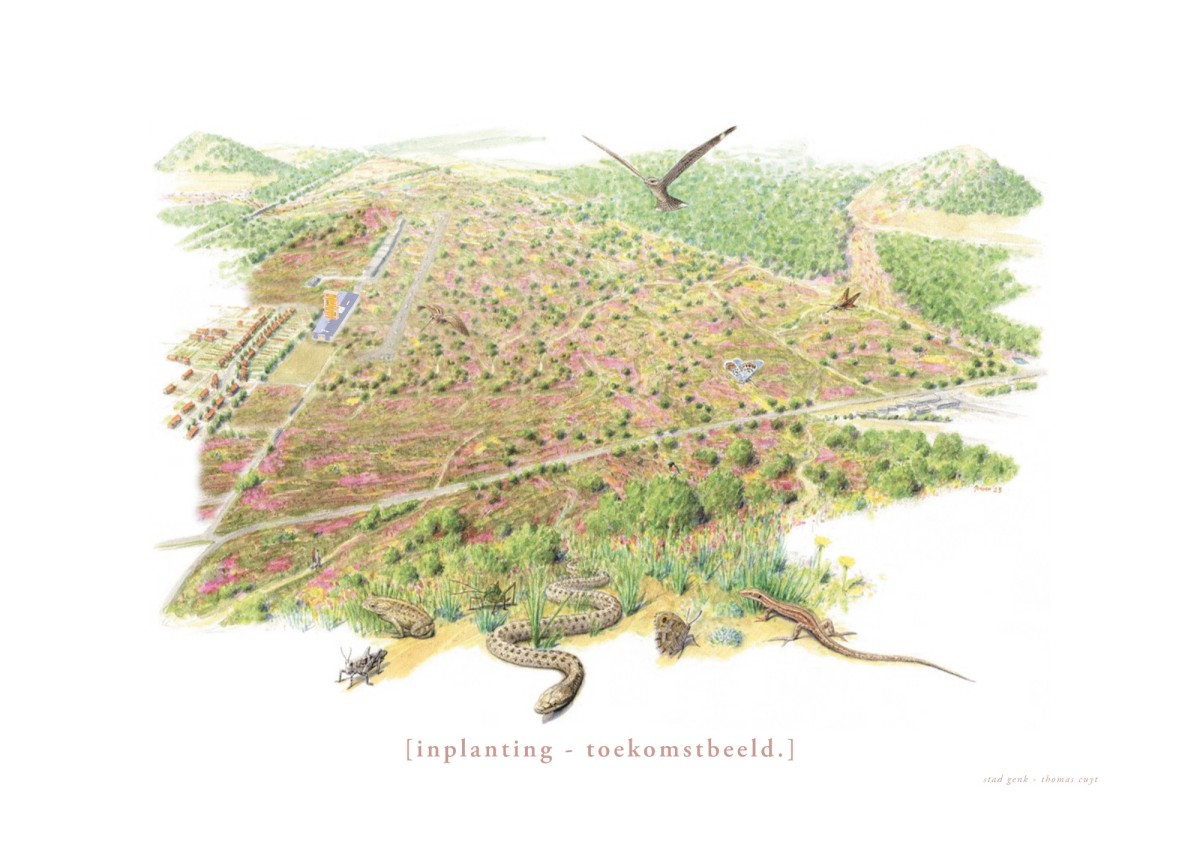
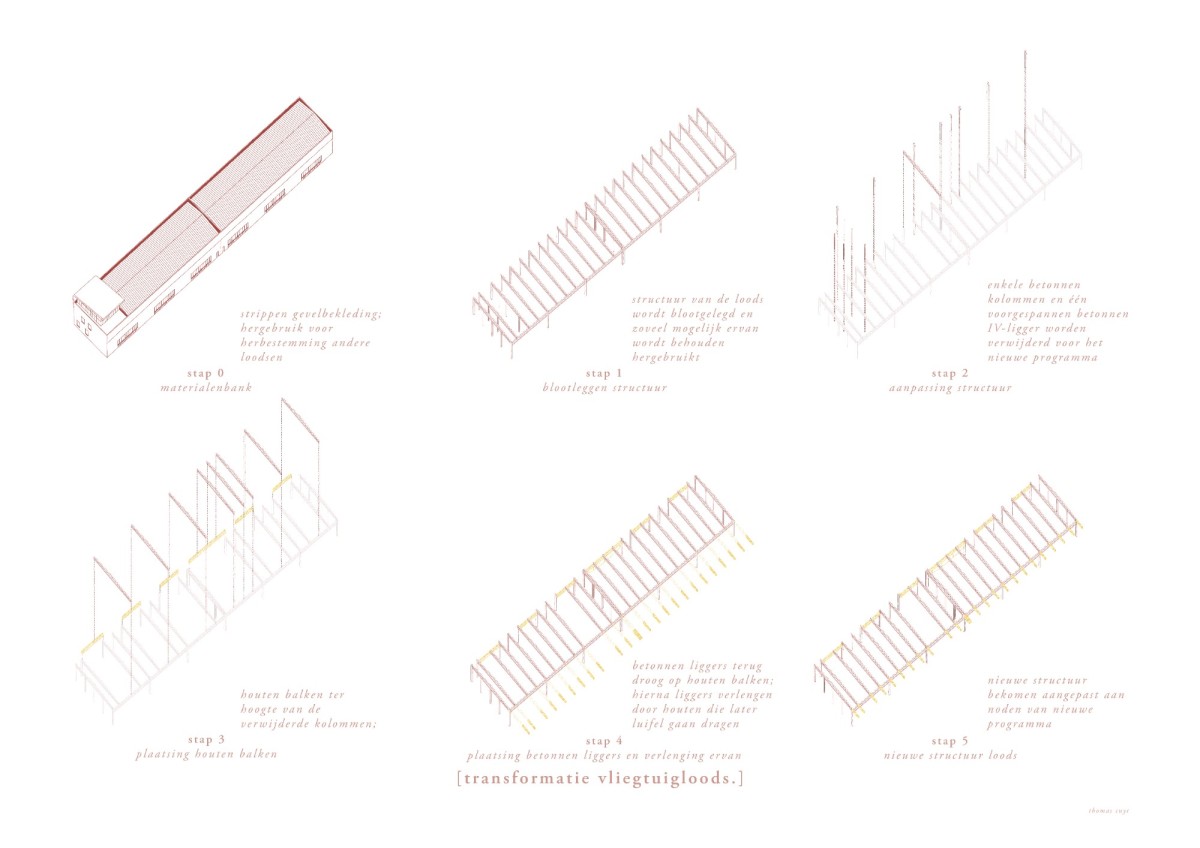
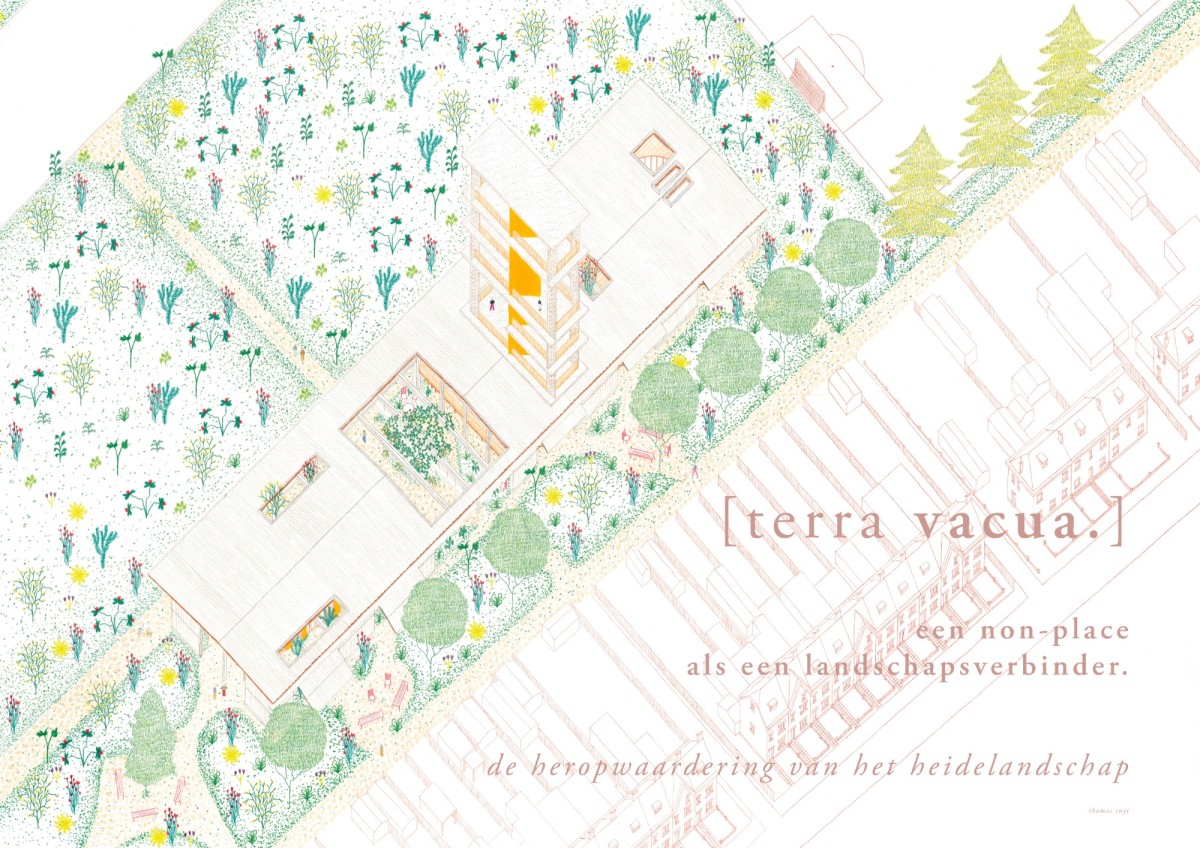
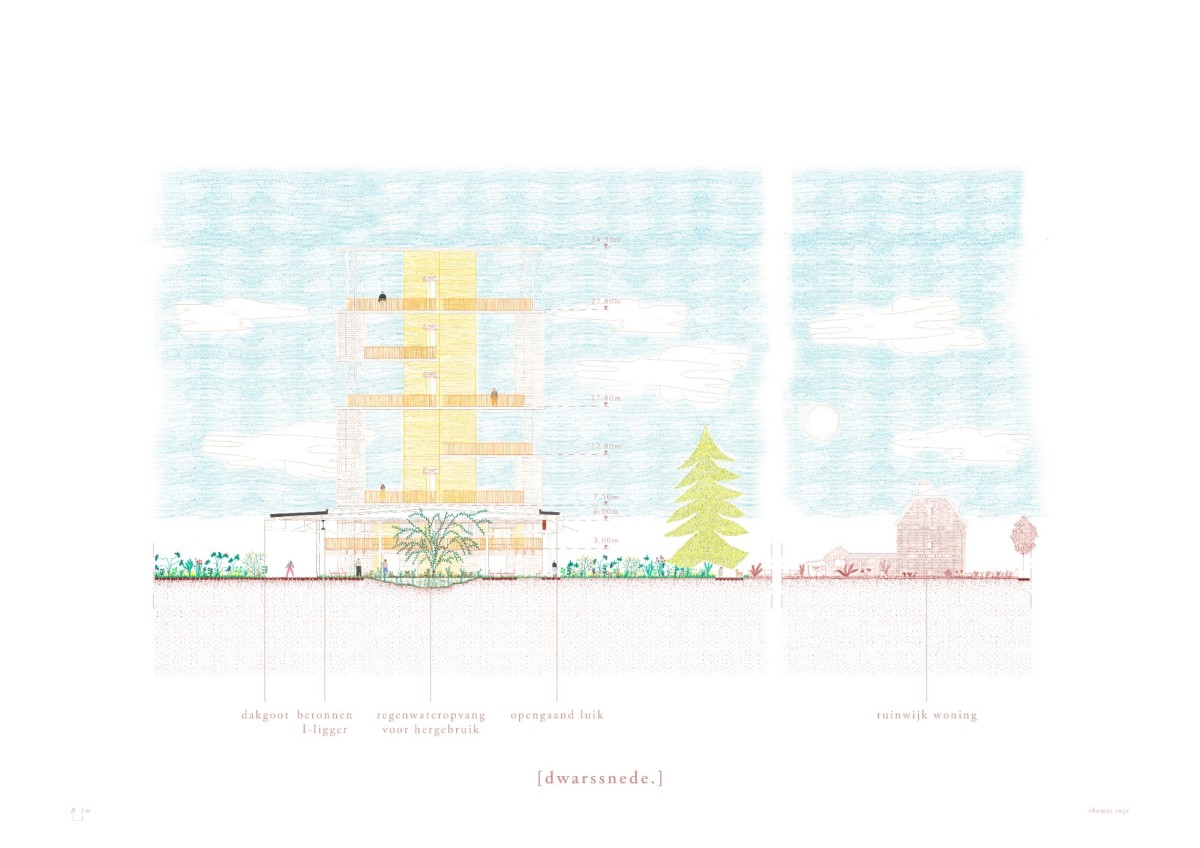
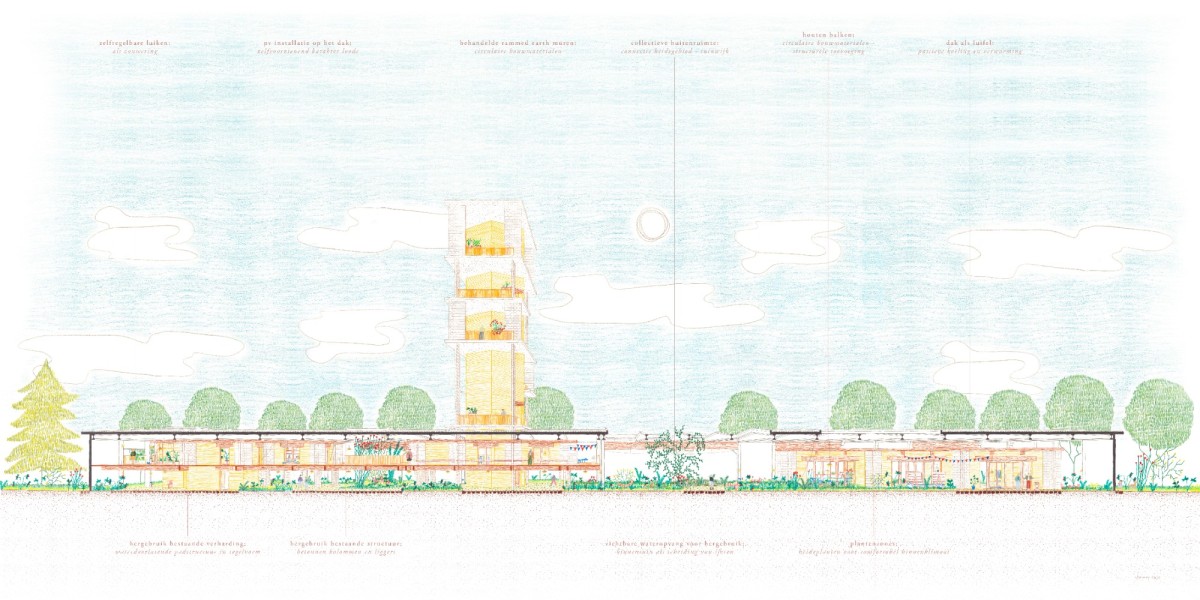
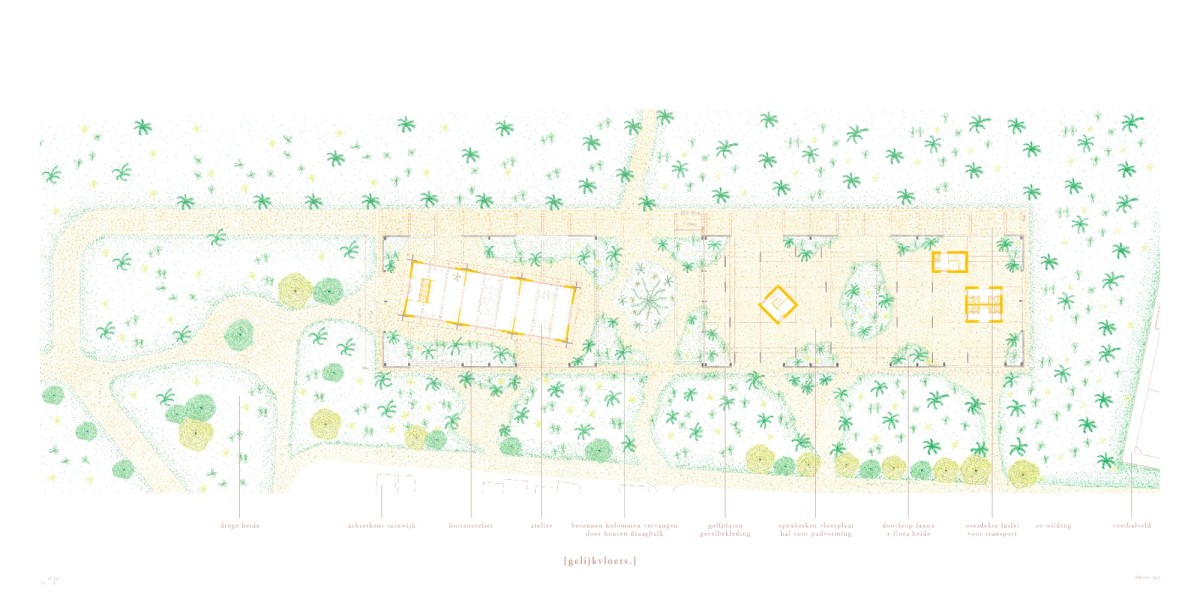
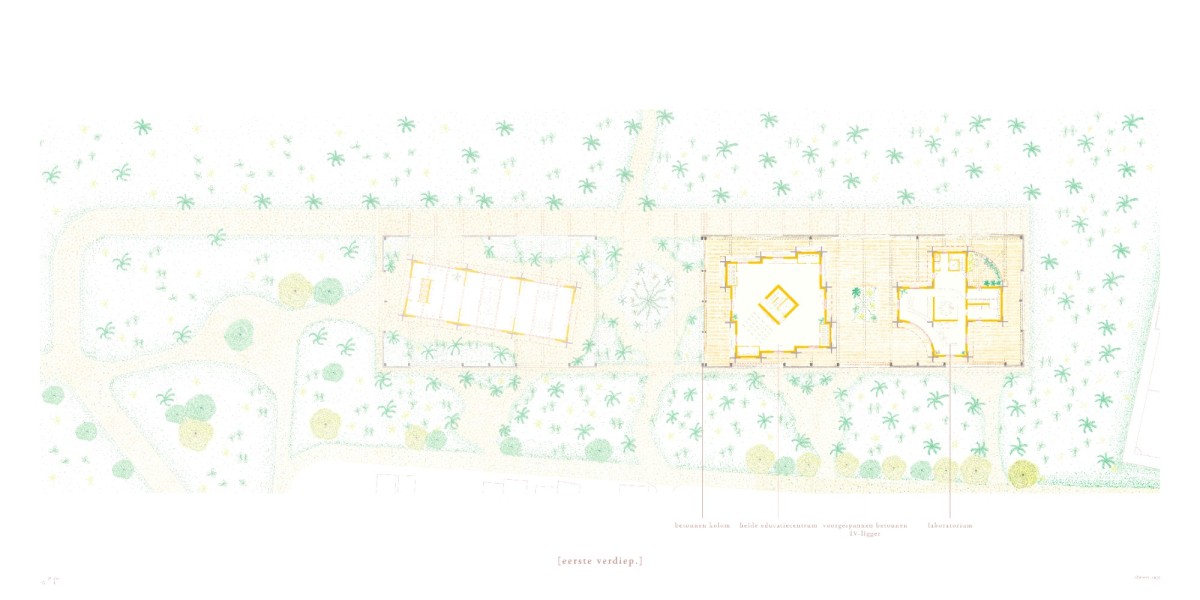
Urbanisation, mining and the construction of Zwartberg Airport have caused the heathland to shrink significantly, meaning that today it has lost almost all of its original area. The redevelopment of the former airport is giving nature the space it needs to reclaim the land. The aircraft hangar is thus given a new role as a connecting point between the residential area and the heathland. This site offers opportunities for encounters between people and nature and strengthens the local identity, with the aim of re-establishing a meaningful relationship between the two.
This project is an exemplary proposal for an applied design strategy to repurpose transition zones into landscape connectors within the fragmented Flemish residential landscape, of which we are all a part. It is precisely these transition zones where I see the greatest design challenge today and where there is enormous potential for future use.
 Thomas Cuyt
 Thomas Cuyt
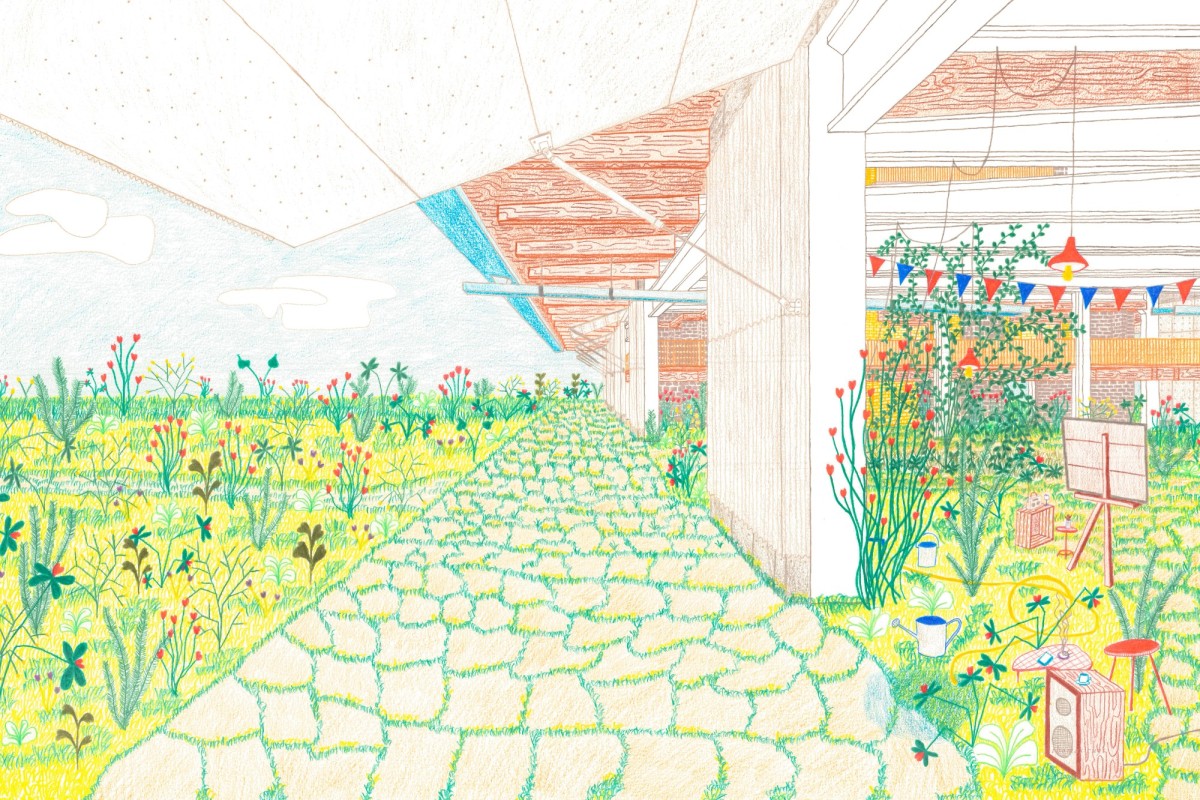
It is precisely through the gutting and curation of buildings or structures in these transition zones that emptiness is created. This emptiness, like a scar in the landscape, can evolve into a link. A fluid zone where natural and human processes meet. The boundary between the artificial and the natural blurs, shifts, and ceases to be a hard line, becoming instead a transitional area, a breathing space that connects rather than divides.
 Thomas Cuyt
 Thomas Cuyt
 Thomas Cuyt
 Thomas Cuyt