Stitching Streams
Ansó is a mountain village in northern Spain, located in the Pyrenees near the French border. Nestled in a deep valley at 866 meters above sea level, the Veral River flows through the village, serving as its main waterway. Transhumance – the seasonal movement of livestock – remains the village’s second most important economic activity and continues to shape both land use and cultural identity.
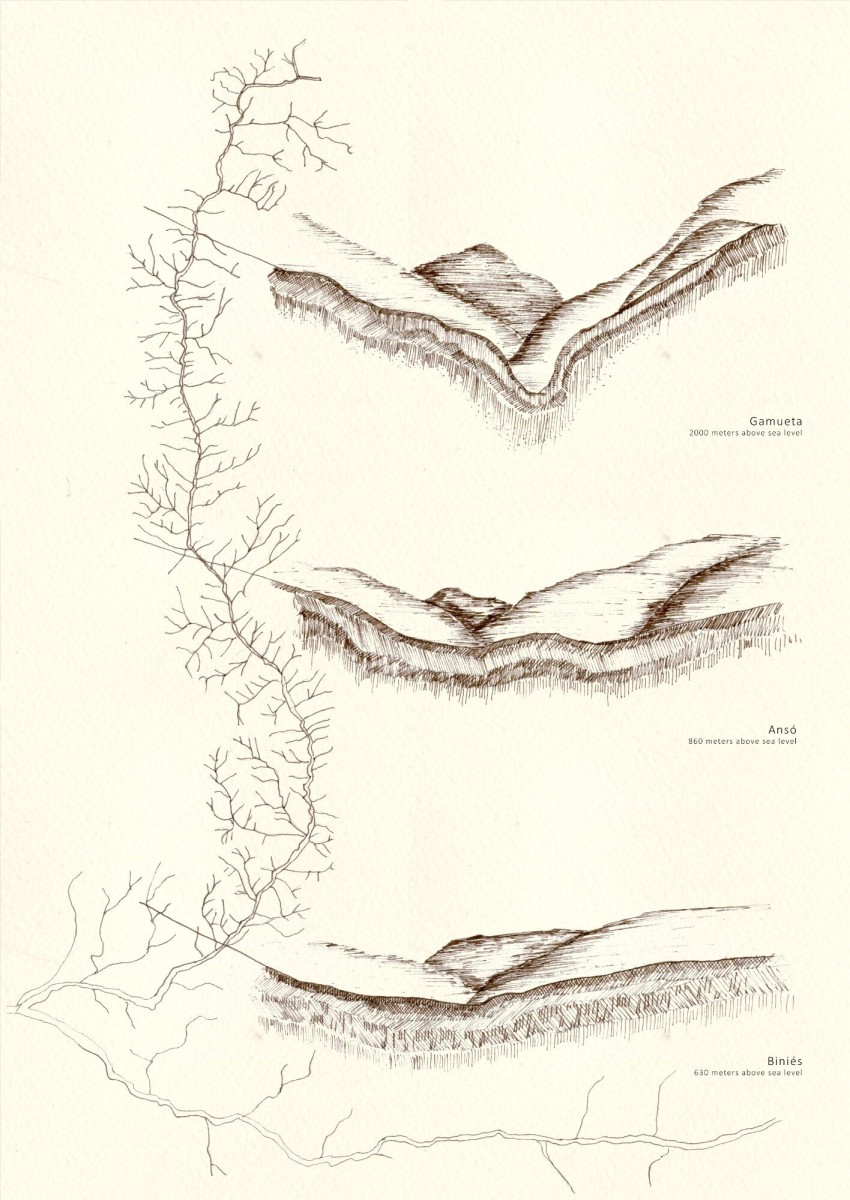

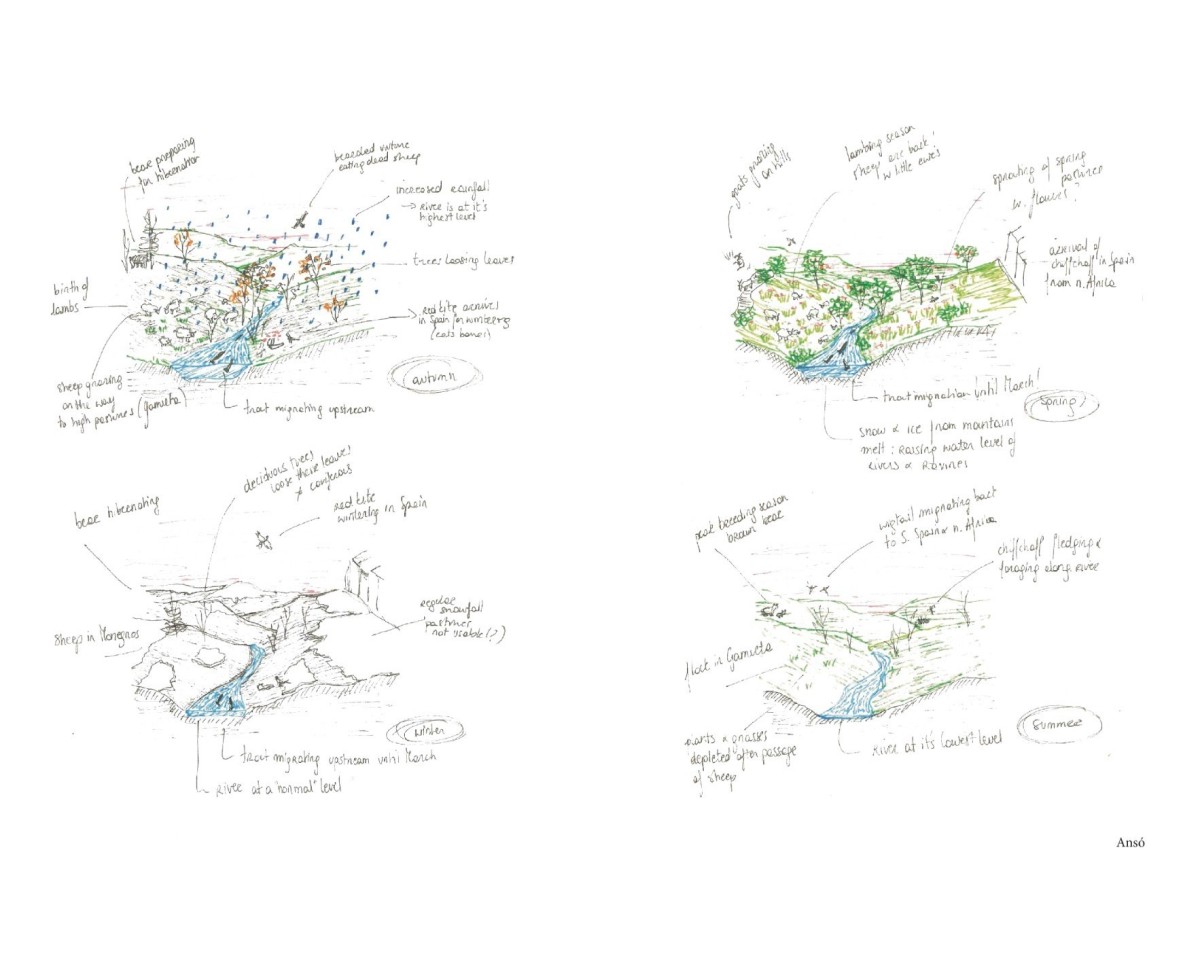
A local shepherd explained how the Veral plays a vital role in his yearly journey with the flock. Following the river and its connected landscapes, he moves between three main areas: the high pastures of Gamueta in summer, the midland grasslands around Ansó, and the lowland fields near Biniés in winter, whilst part of his flock is sent further to Monegros. This route spans at least 155 kilometres annually and reflects a rhythm deeply tied to topography, climate, and seasonal resources. This understanding prompted a broader exploration of the landscapes along the route: their defining characteristics, the timing of the shepherd’s presence, and the impacts on biodiversity and human-nature interactions.
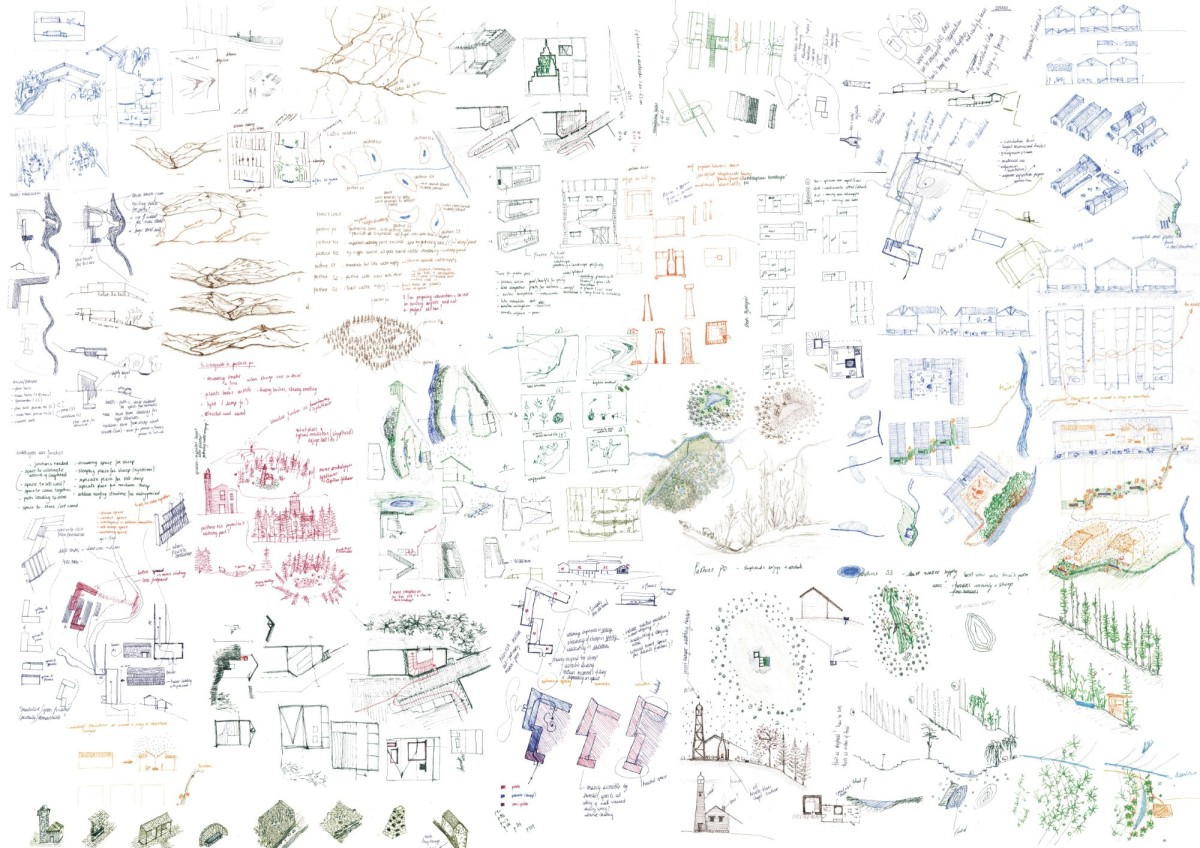
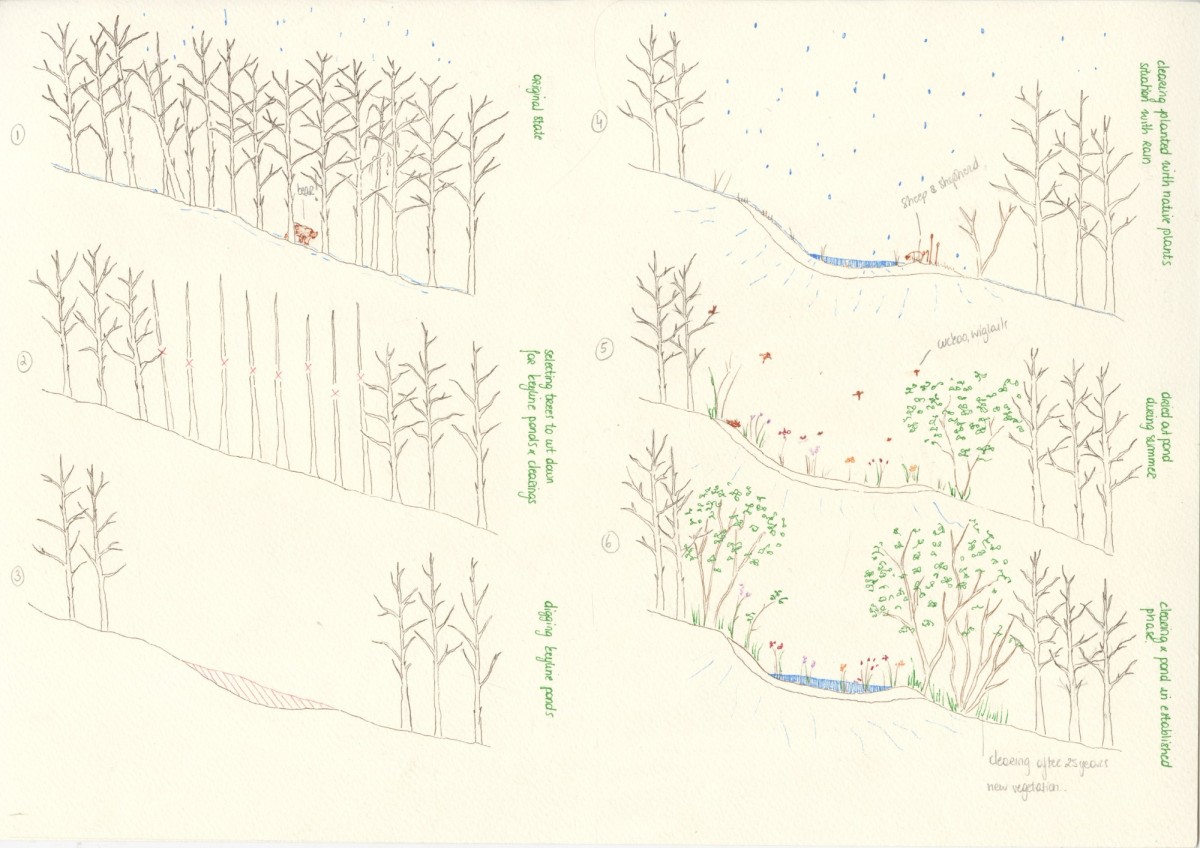
These seasonal dynamics offer insight into how architectural and landscape interventions might support the four main actors in this system: the shepherd and his sheep, the river, humans, and the biodiversity connected to both, including predators, opportunistic species, and fragile ecosystems. Though modest in scale, the proposed interventions show how small, site-specific actions can strengthen ecological functions while respecting traditional practices. Shaped by each settlement’s natural cycles and guided by water as a central element, these strategies aim to reconnect fragmented landscapes along the Veral and its tributaries. Water sustains the soil, ecosystems, and seasonal use patterns. Taken together, these approaches could help address broader issues such as soil degradation, water scarcity, and biodiversity loss – not only in Aragón but across rural Spain.